Some places make even a wedding photographer lower the camera for a moment, just to look. Banff is one of them. Turquoise lakes mirror glaciers, rock faces glow orange at sunset, and a town of timber lodges sits at the foot of Cascade Mountain, all within a short drive of one another.
At AGI Studio, our Toronto wedding photographers have travelled to Banff National Park with couples, and we’ve learned which spots reward the trip and what to know before you go. Here are our favourite Banff wedding locations, along with the rules and logistics that come with them.
What to Know Before You Book a Banff Wedding Location
Banff National Park has its own rules for weddings. Parks Canada asks couples to complete a wedding ceremony registration form, caps ceremonies at 20 participants, limits props to a small arch, registration table, and chair, and requires everyone attending to hold a valid park entry pass. Ceremonies inside the Town of Banff are booked through the town instead, so the first question is always which side of the boundary your location sits on.
Professional photographers also need a business licence to work in the park (the Town of Banff issues its own for work inside the townsite), so ask any photographer you’re considering whether theirs is in order. Approvals take time, so confirm the requirements for your specific plans with Parks Canada well ahead of your date.
Our Favourite Banff Wedding Locations
Lake Louise
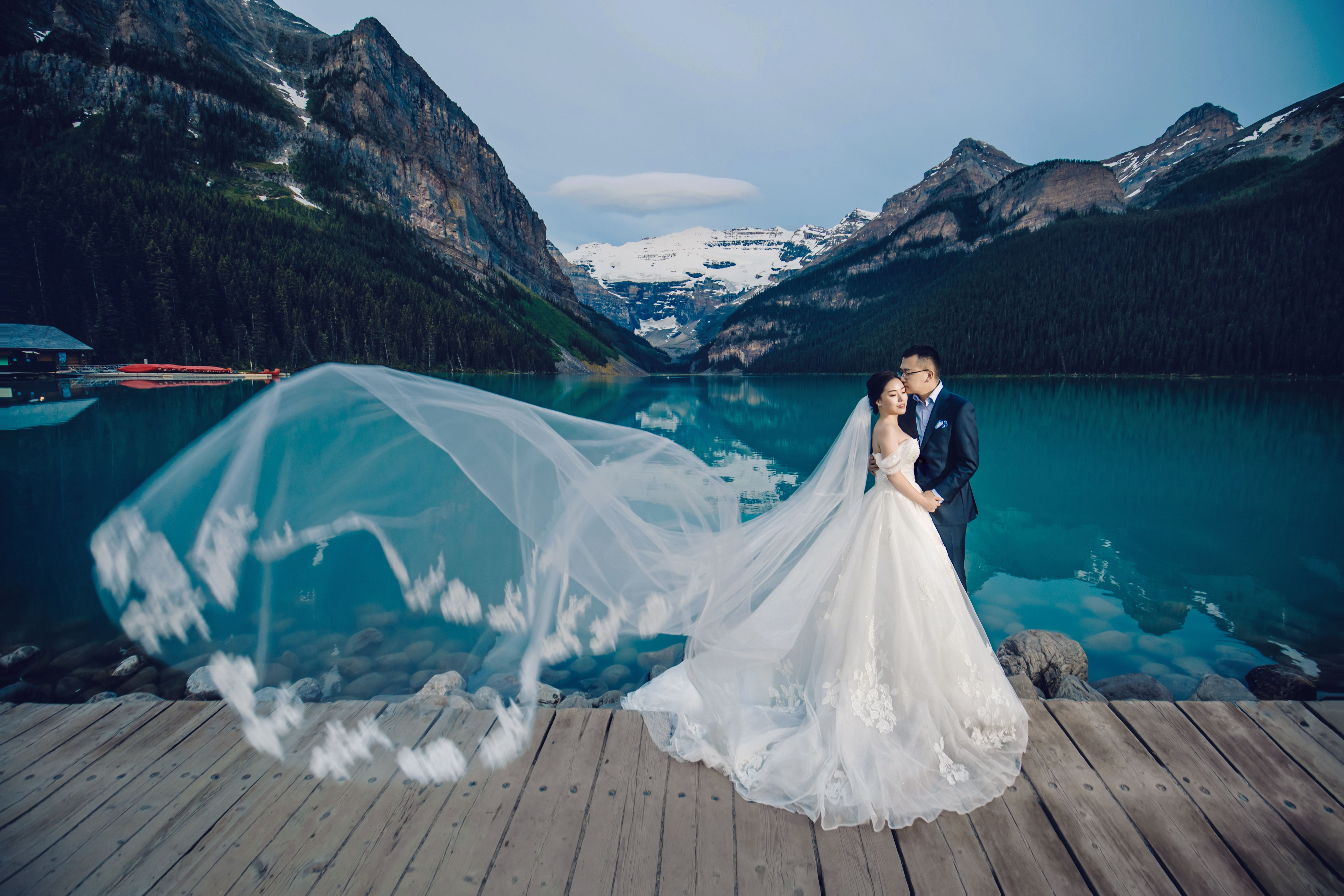
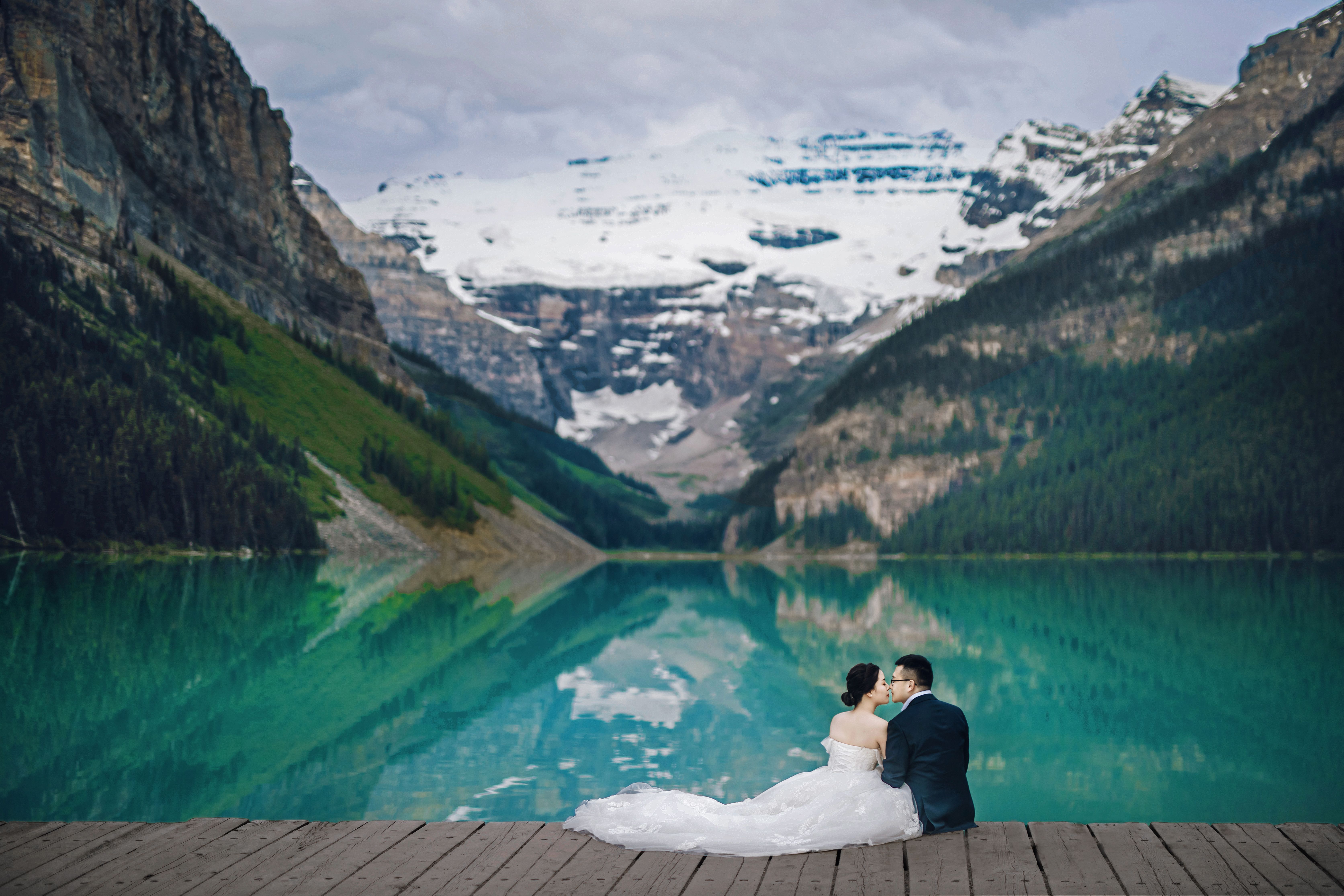
Few views in the Rockies are as famous as Lake Louise, where milky turquoise water reflects Victoria Glacier and the peaks around it. The wooden dock beside the boathouse is a favourite for portraits, especially early in the morning when the surface is still enough to mirror the mountains, and a long veil lifting in the breeze over that water makes a frame no studio can match. The Fairmont Chateau Lake Louise sits right on the shore, which makes it easy to pair a ceremony or reception with portraits close by. Lake Louise is one of the busiest places in the park, so arriving early matters, and it’s worth checking Parks Canada’s current parking and shuttle details before you go.
Moraine Lake
Set beneath the Valley of the Ten Peaks, Moraine Lake once appeared on the back of the Canadian twenty-dollar bill, and one look explains why. Since 2023, Parks Canada has closed the road to personal vehicles, so guests and vendors reach the lake by shuttle or an approved commercial operator, and the road is only open in summer and early autumn. It’s absolutely worth the planning, but build extra travel time into your timeline.
Sulphur Mountain and the Banff Gondola
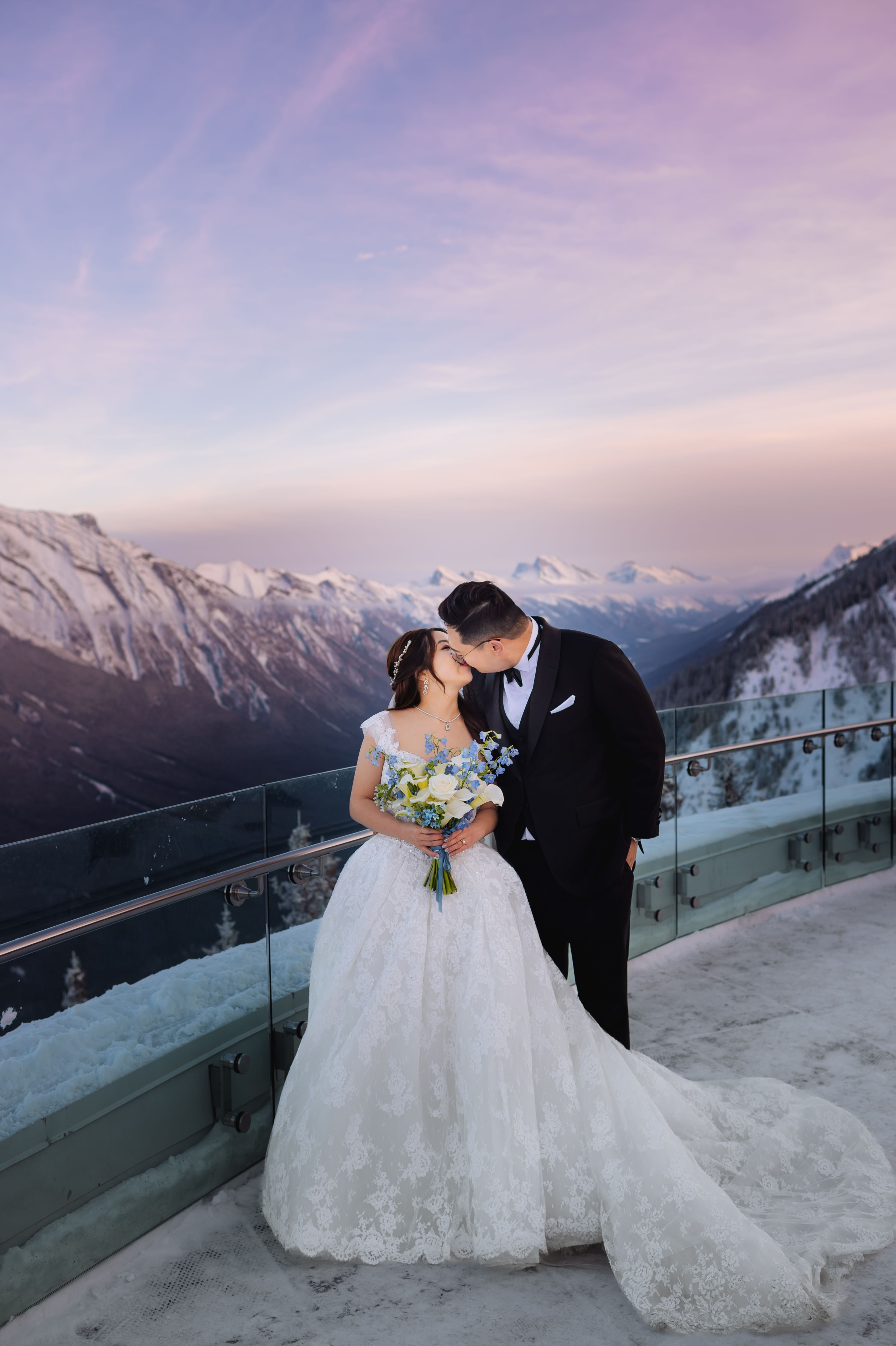
For mountain views without a hike, the Banff Gondola carries you to the summit of Sulphur Mountain in about eight minutes. A boardwalk and glass-railed viewing platforms along the ridge give you a panorama of the surrounding ranges, and sunset here can turn the sky and the snow pink and violet at the same time. In winter, a shawl or fur wrap isn’t just a styling choice, so plan for cold hands and efficient portraits. Build the gondola’s operating hours into your timeline too, so you know when the last ride down leaves before you chase the light.
Cascade Gardens and Banff Avenue
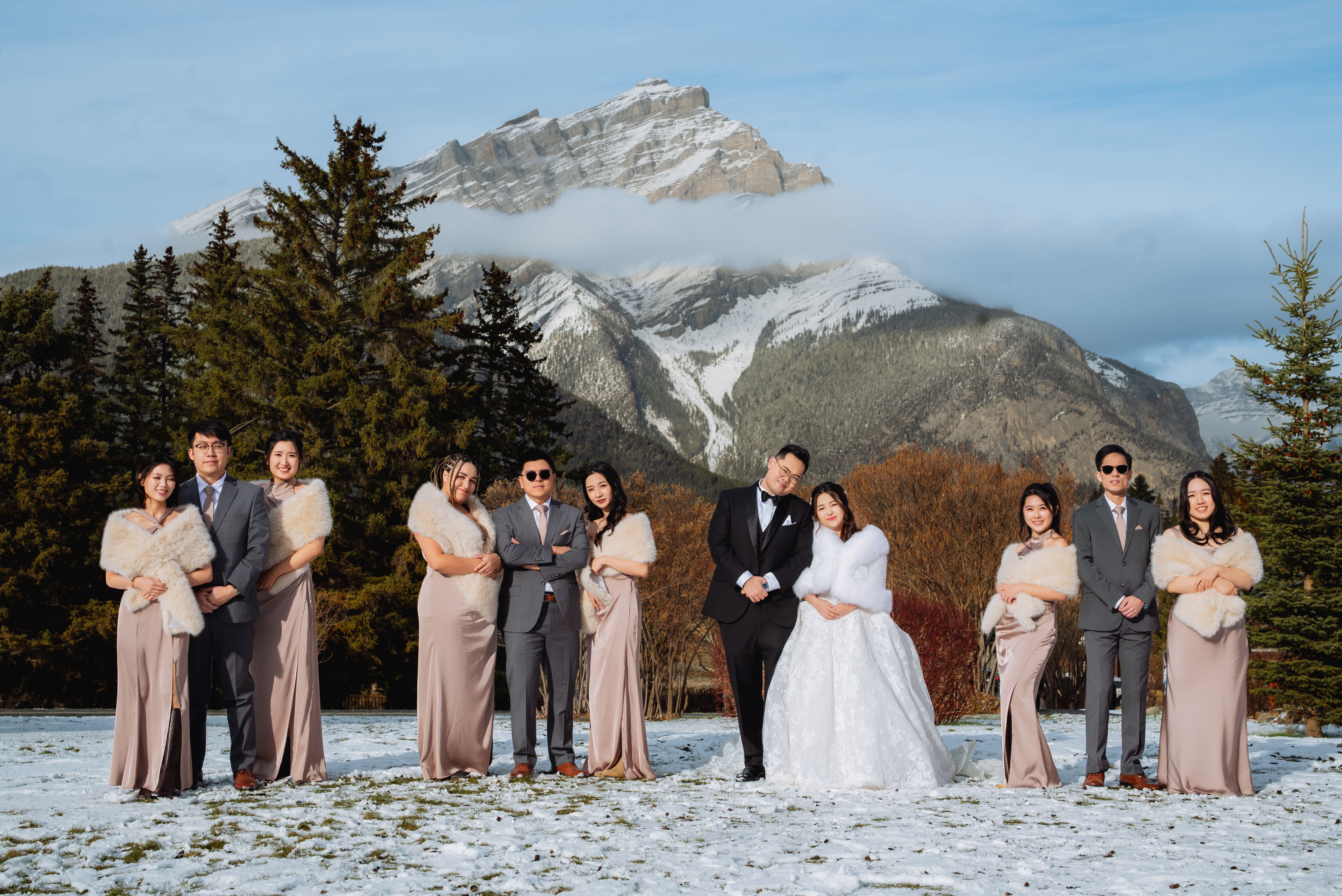
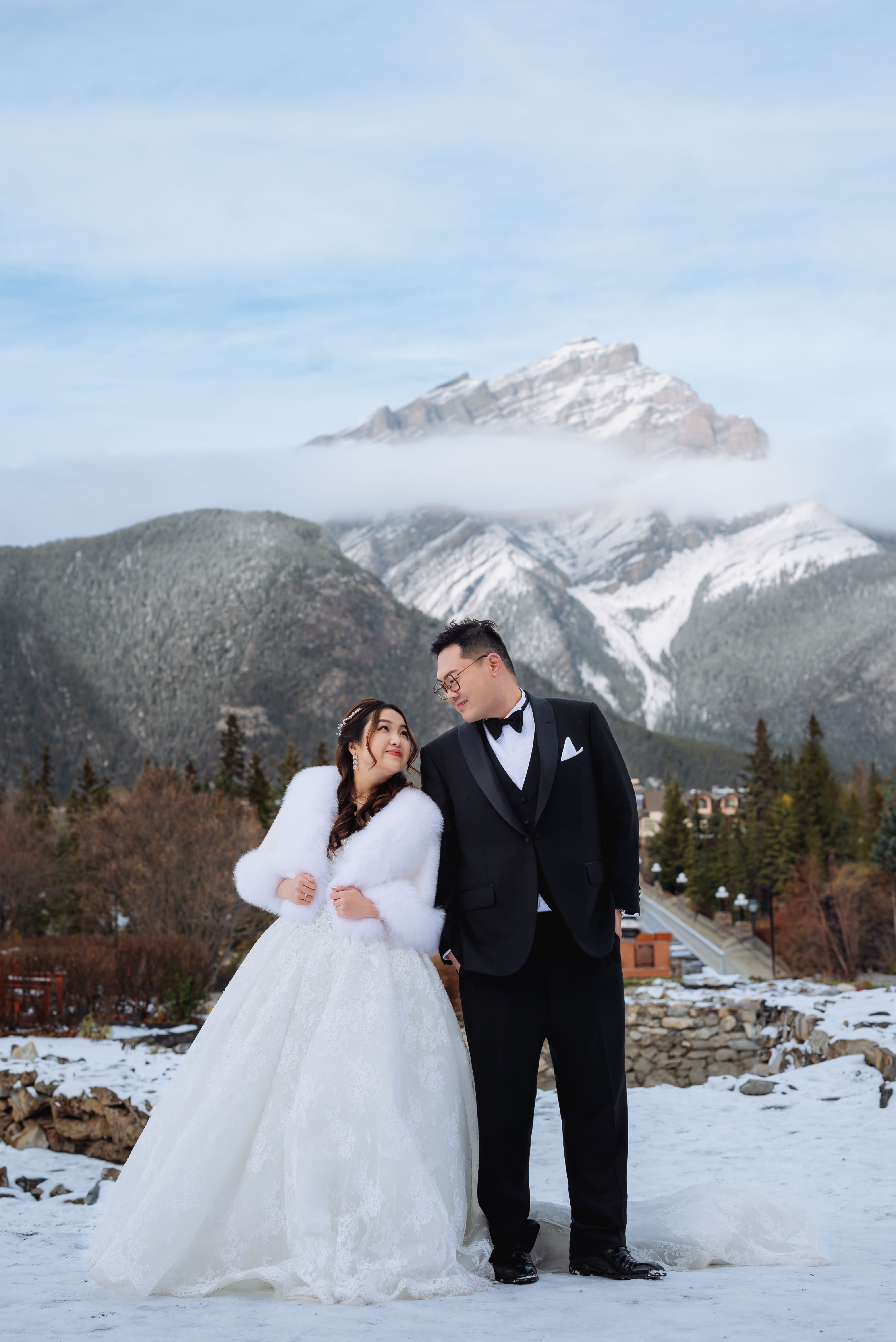
Right in town, the Cascade of Time Gardens sit just across the Bow River bridge from Banff Avenue, with Cascade Mountain rising behind the stone walls, ponds, and terraced paths. The peak makes a dramatic backdrop for bridal party portraits, and a covered pavilion in the gardens suits a very small ceremony. The gardens are popular with visitors, so early mornings are calmer. Because they sit on Parks Canada administration grounds inside the townsite, we confirm permissions with both Parks Canada and the Town of Banff before locking in a plan.
Two Jack Lake and the Lake Minnewanka Loop
A short drive northeast of town, Two Jack Lake reflects the northern face of Mount Rundle, and the whole ridge glows when the evening sun hits it. Two Jack Lake and neighbouring Lake Minnewanka stay accessible through much of the year, though the western section of the Lake Minnewanka Loop closes from November to May to allow wildlife passage. Parking is tight in summer and wildlife is common along the loop, so we keep a respectful distance and build in extra time.
Choosing Among Banff Wedding Locations by Season
Summer brings the famous turquoise water, wildflowers in the meadows, and light that lingers late into the evening, which is why June through September is the most popular window for Banff weddings. Winter trades that for snow-dusted peaks and softer, pinker sunsets, with fewer crowds and a lot more layers.
Some locations, like Moraine Lake, are seasonal altogether, so the date you choose can decide your location as much as the other way around. It’s worth picking your top two or three spots before you lock in a date.
Planning a Banff Wedding From Toronto
A Banff wedding from Toronto usually means a flight to Calgary followed by a drive of roughly an hour and a half, so we plan travel days around your schedule and add a buffer for mountain weather. If you want the ceremony itself to be legally binding, you’ll need an Alberta marriage licence, which is why many couples marry at home and treat Banff as a celebration. If you’d like to see how the mountains fit into your plans, a pre-wedding session is a relaxed way to start.
At AGI Studio, we scout ahead, plan around the light and the season, and build backup options into every mountain itinerary, so a change in weather never takes over your day. We’d be happy to talk through which of these locations fits your date, guest count, and style. For more ideas beyond the Rockies, take a look at our guide to top destination wedding locations for Toronto couples.
Dreaming of a Banff wedding?
Let AGI Studio’s Toronto wedding photography team travel to the Rockies with you. Contact us today to learn more about our destination packages and availability.