There’s a moment in a Jewish wedding that makes a whole room hold its breath, then erupt. A glass shatters, one word rings out (“Mazel tov!”), and within seconds the quiet reverence of the ceremony gives way to cheering, singing, and dancing. Few weddings move between solemnity and pure joy so quickly, and a photographer has to be ready for both.
At AGI Studio, our Toronto wedding photographers have photographed Jewish weddings across the Greater Toronto Area, from ceremonies beneath the chuppah to dance floors packed with guests. Here’s what to expect from the traditions, and how we approach capturing each one.
Understanding a Jewish Wedding in Toronto
Toronto is home to one of the largest Jewish communities in Canada, and no two Jewish weddings look quite alike. Orthodox, Conservative, Reform, and interfaith ceremonies each carry their own customs, and many families layer in traditions from their own heritage, whether Ashkenazi, Sephardic, or Mizrahi. A Jewish wedding usually centres on a few core elements: the ketubah, the chuppah, the blessings, the breaking of the glass, and the dancing that follows.
What follows is what we see most often. Your own ceremony may look different, which is exactly why we ask couples to walk us through their plans well before the day.
Before the Ceremony: The Ketubah and the Veiling
The Ketubah Signing
The ketubah is the Jewish marriage contract, and signing it is often one of the quietest, most personal moments of the day. The couple, the officiant, and two witnesses gather around a table, often with close family looking on, while the document is read and signed. Many couples commission their ketubah as a piece of art, so we photograph both the signing itself and the finished document up close.
The Bedeken
In many Ashkenazi traditions, the groom lowers the veil over the bride’s face just before the ceremony, a custom known as the bedeken. It’s emotional and it happens fast, so we position ourselves quietly to catch both faces in the same frame.
The Chuppah Ceremony: Vows Beneath the Canopy
The Chuppah
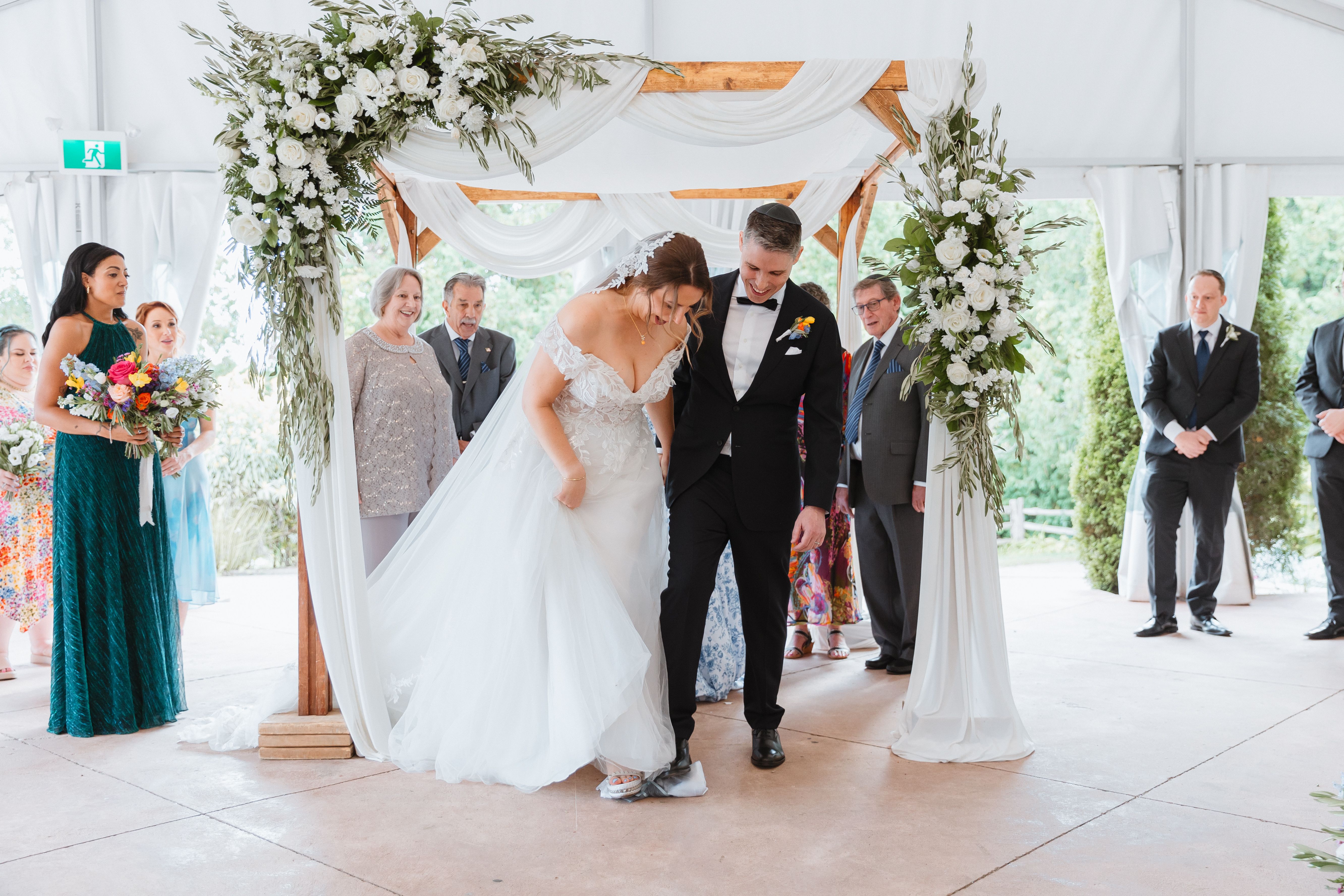
The chuppah is the canopy the couple marries beneath, a symbol of the home they’ll build together. Some are simple cloth held aloft on four poles by friends or family, while others are freestanding wooden frames dressed in flowers and flowing fabric. Because the sides are usually open, the ceremony feels both intimate and communal, with family standing close enough to be part of every frame.
The ceremony itself includes blessings over wine, the exchange of rings, and the seven blessings known as the sheva brachot. We shoot it with longer lenses from the sides, staying clear of the officiant and the families while still catching the expressions on the couple’s faces and the guests around them.
The Breaking of the Glass
The ceremony ends when the couple steps on a glass wrapped in cloth (traditionally the groom does it, though many couples now do it together). The custom recalls the destruction of the Temple in Jerusalem, a reminder that joy and sorrow often sit side by side. The instant the glass breaks, the room shouts “Mazel tov!”, and the best expressions of the entire ceremony tend to follow. We keep the camera up for a few seconds after the sound, because that’s when the reactions arrive.
A Few Minutes Alone: Yichud
After the ceremony, many couples spend a few private minutes together in a custom called yichud. We step back completely during that time, and we build the schedule so portraits happen either before the ceremony or just after, so nothing cuts into it. Many couples also choose a first look beforehand, which keeps the cocktail hour relaxed and lets them join their guests sooner.
The Hora: Chairs, Napkins, and Pure Joy
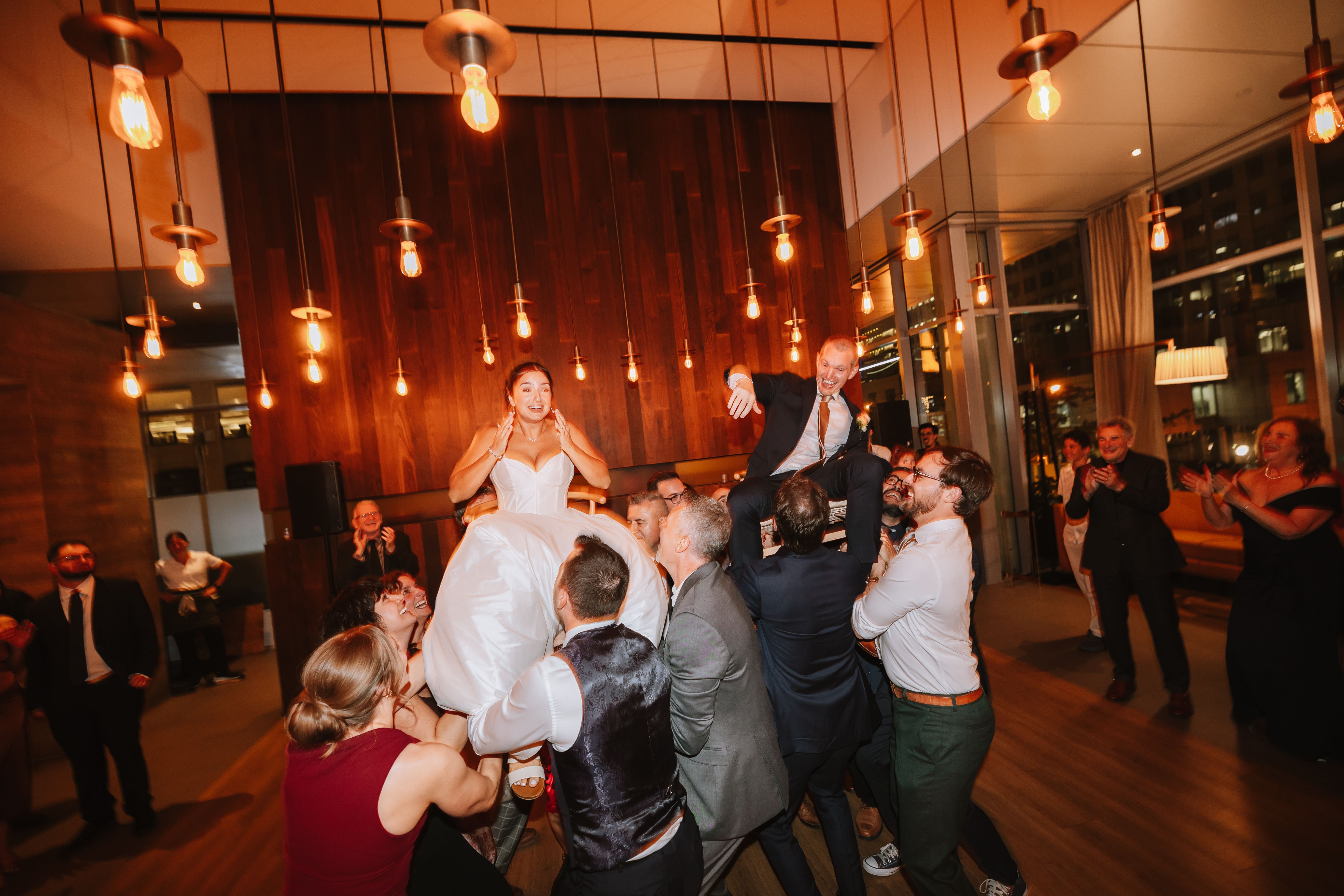
If the ceremony is the heart of a Jewish wedding, the hora is its pulse. Guests link hands in circles around the dance floor, the pace builds, and eventually the couple is lifted into the air on chairs, often holding a napkin or handkerchief between them. It’s loud, fast, and a little chaotic, which is exactly what makes it so photographable.
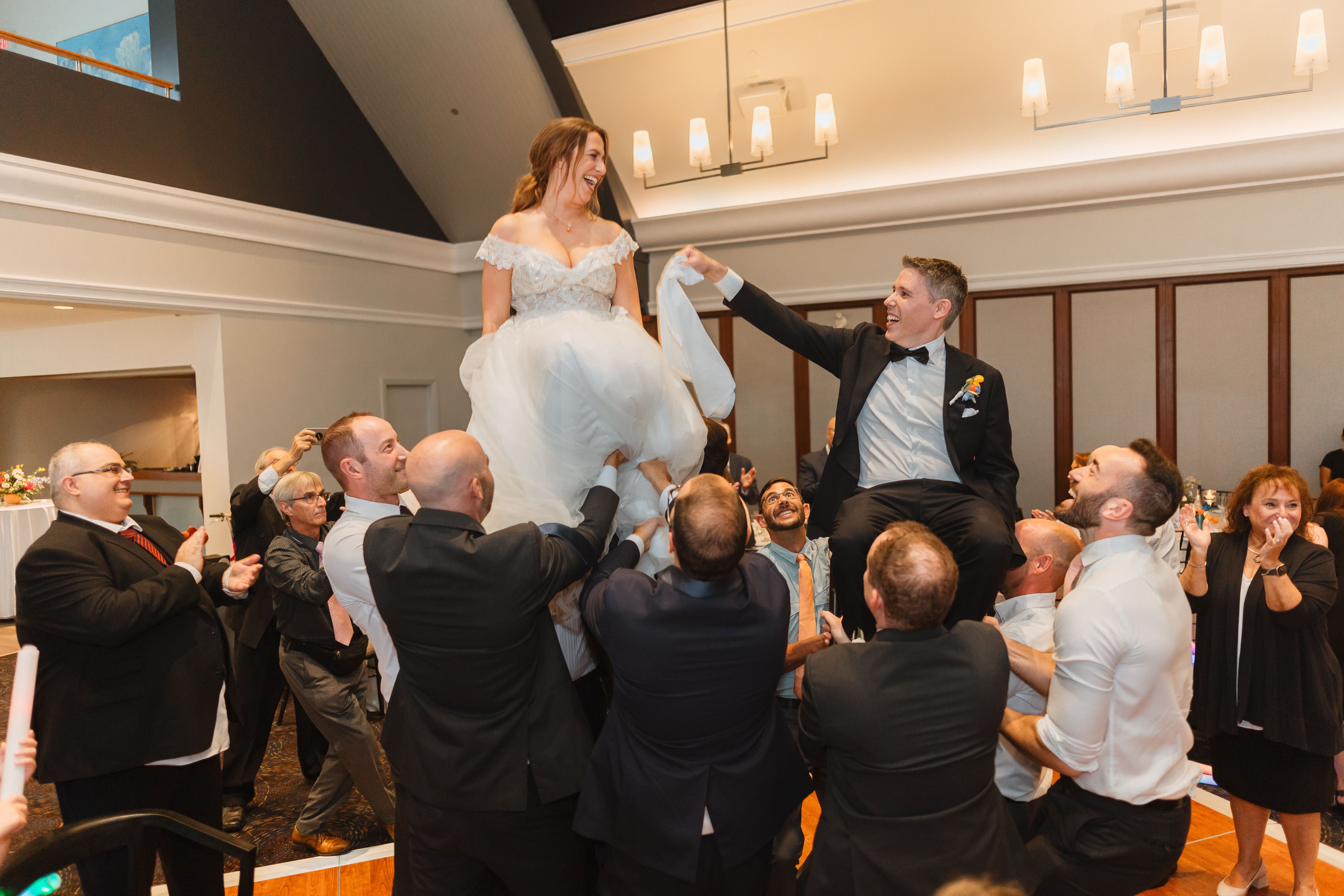
Photographing it well takes preparation. The chair lift lasts only a few seconds, and the best frame catches the couple’s faces mid-laughter before the crowd closes in. We position ourselves at their height, use a fast shutter speed to freeze the motion, and rely on lighting we’ve scouted in advance, since receptions are often dim by this point in the evening. If you’re still choosing a reception space, our guide to Toronto’s top indoor wedding photo locations can help you find one with room to move.
Planning Around the Jewish Calendar and Your Community
Jewish weddings aren’t held on Shabbat or on major holidays, and some stretches of the Jewish calendar are avoided as well. That’s why Saturday-night weddings, after Shabbat ends, are so common, and it usually means an evening ceremony and a reception that runs well into the dark. We plan lighting and timelines around that from the start.
Some communities also have specific guidelines about photography, whether that’s where a photographer can stand during the ceremony or whether men and women dance in separate sections. A conversation with your rabbi or officiant ahead of time, and a photographer who asks rather than assumes, takes care of most surprises.
A Jewish wedding moves between reverence and celebration in a way few others do, and it deserves a photography team that can follow it. At AGI Studio, we bring cultural awareness, a quiet presence during sacred moments, and the technical skill to handle everything from a daylit ceremony to a dim, packed dance floor. If you’re curious how we approach other traditions, our guide to Indian wedding photography in Toronto is worth a read too.
No two families celebrate in exactly the same way, and we would never assume otherwise. Before your wedding day, we sit down with you to understand your family’s customs, so every moment is captured with the care and accuracy it deserves.
Planning a Jewish wedding in Toronto?
Let AGI Studio’s Toronto wedding photography team capture every moment, from the signing of the ketubah to the last dance of the night. Contact us today to learn more about our packages and availability.